

City of Tallinn
Connecting Tallinn citizens with city services through a WhatsApp reporting chatbot
The challenge
Tallinn citizens could already report city problems through existing services, but many people did not know about them or found them difficult to use. Some used Facebook or neighbourhood group chats instead, while others did not know where to report a problem. Unanswered reports, unclear responsibilities and complicated communication also made people less willing to report issues.
The goal was to create one simple way for citizens to report problems and make sure each request reached the right city department. The solution also needed to be accessible, trustworthy and easy to use without downloading a new app or learning a new system.
Methods
Desk Research, Content Analysis, Concept Mapping, Semi-Structured Interviews, Card Sorting, Information Architecture Mapping, Brainstorming, Prototyping, Backend Development
Team
Saara Vällik, Joseph Kalu, Yuliia Bulakh
Duration
3 Months
Research
The project used real citizen requests, interviews and card sorting to understand how Tallinn residents report city problems. The research explored what problems people report, which channels they prefer and why they sometimes choose not to report an issue. The findings helped shape the information architecture and the final chatbot solution.
→ Desk research & information architecture mapping
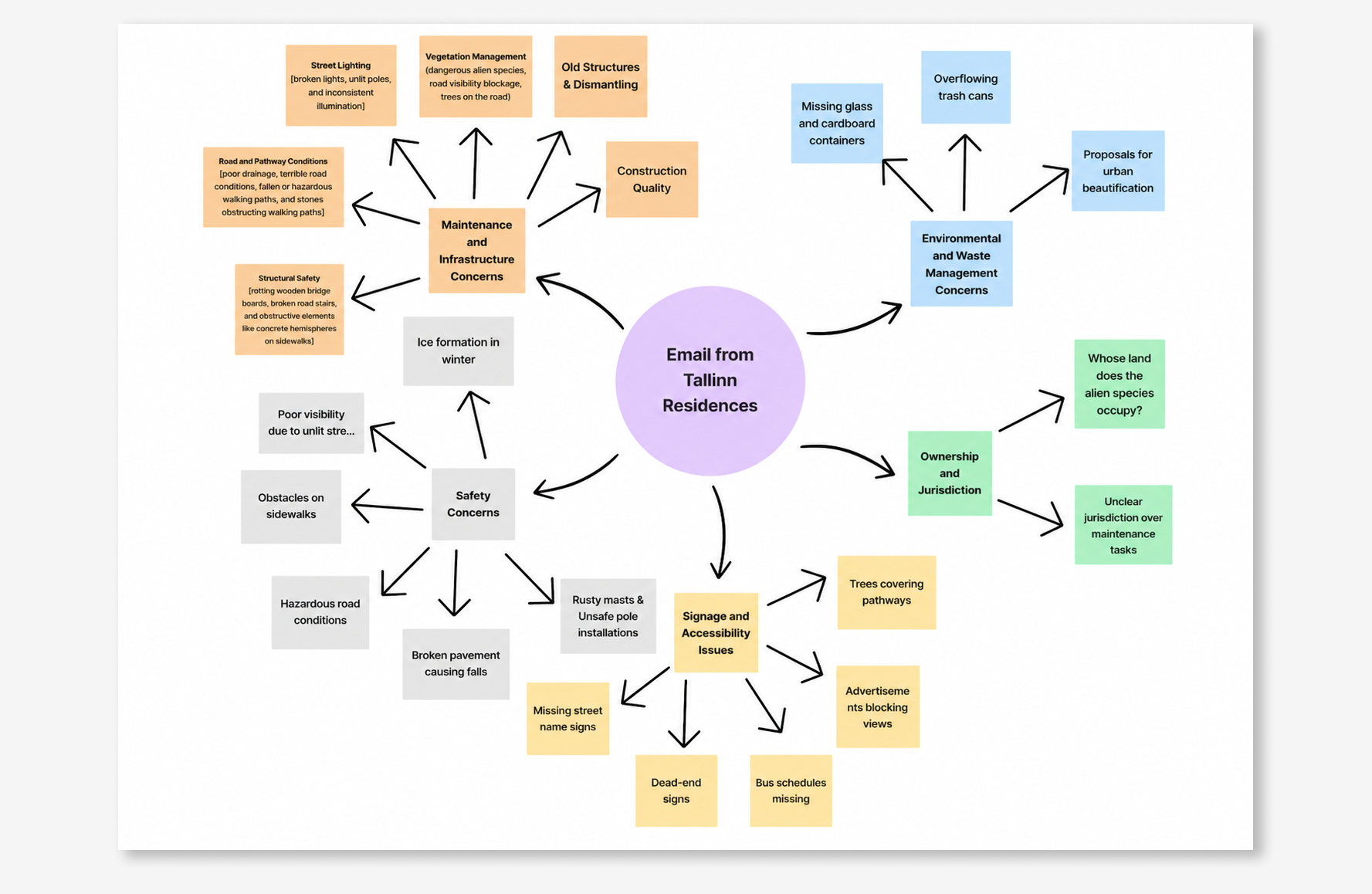
The existing customer support system was analysed together with five anonymised citizen emails and 22 requests from Anna Teada. The analysis helped identify common communication patterns, user problems and the main types of city issues. These findings were used for the card-sorting activity and helped shape the information architecture.
→ Semi-structured interviews & hybrid card sorting
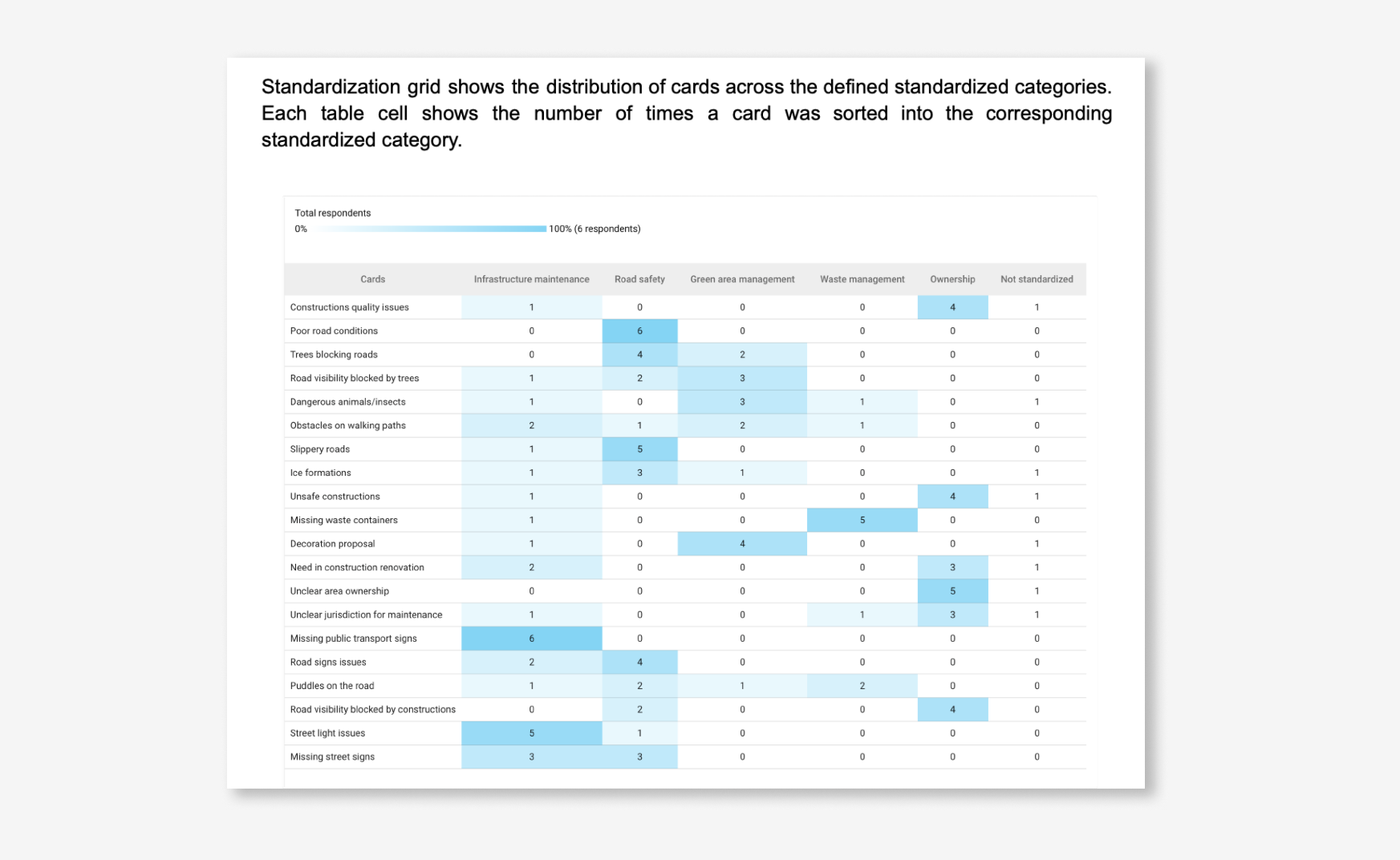
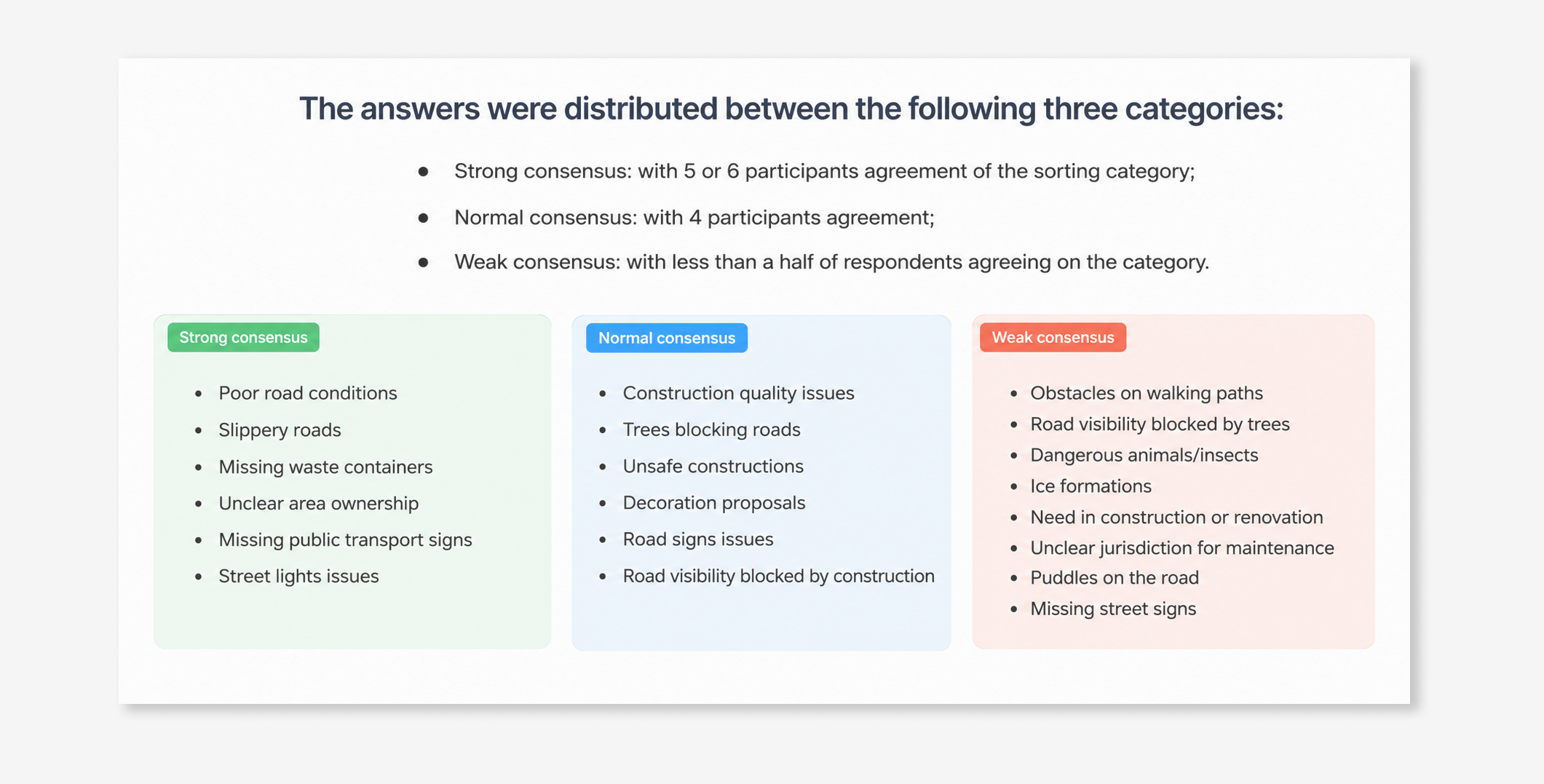
Six Tallinn residents took part in semi-structured interviews about how they report city problems and use existing city services. The interviews were followed by a card-sorting activity, which helped understand how users organise information and create a clearer information structure for the final solution.
→ Information architecture recommendations
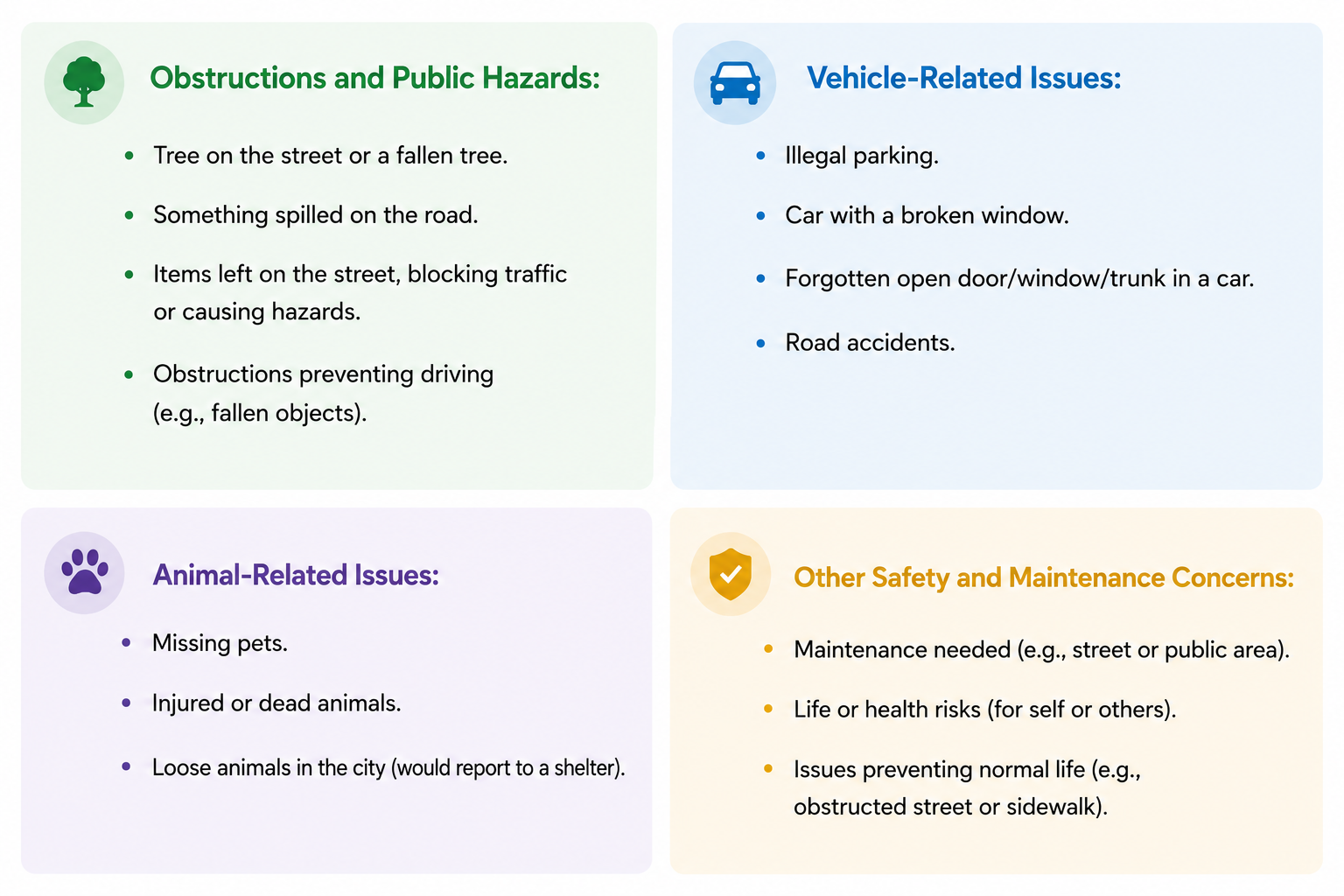
The research showed that users often found it difficult to choose the right category for a city problem. The new information structure uses clearer categories and subcategories and helps users find the right city department for each issue.
Key Insights
→ Many citizens rarely used official reporting services
Half of the participants had never used Anna Teada or similar reporting channels, while some were completely unfamiliar with the platform. Instead, many followed local issues through Facebook groups or neighbourhood chats without reporting them directly to the city.
→ Previous experiences influence willingness to report
Unresolved issues and the lack of feedback reduced motivation to contact municipal services again. When citizens could not see whether their reports led to action, they gradually lost confidence in the system.
→ The need for a single entry point for reporting urban issues
Participants preferred a single place where different types of urban problems could be reported instead of searching for the correct department or communication channel for each individual issue.
→ Simplicity is more important than additional features
Most participants preferred a mobile-friendly website instead of another app. They wanted a simple and quick reporting process that helped them provide the right information.
→ Guidance is helpful, but human support is still important
Participants liked using a chatbot to guide them through the reporting process, but still wanted a real person to handle their requests. Automation makes reporting easier, while human support helps build trust.
Design Solutions
The research showed that citizens wanted a simple and familiar way to report problems without searching for the right department or downloading a new app. Privacy, ethical, and trust concerns also made an AI-based solution unsuitable. These findings led to a WhatsApp chatbot that guides users through the reporting process and connects requests directly to the city’s Jira workflow.
→ Familiar and accessible reporting channel
Problem – Citizens do not want to download and learn another app.
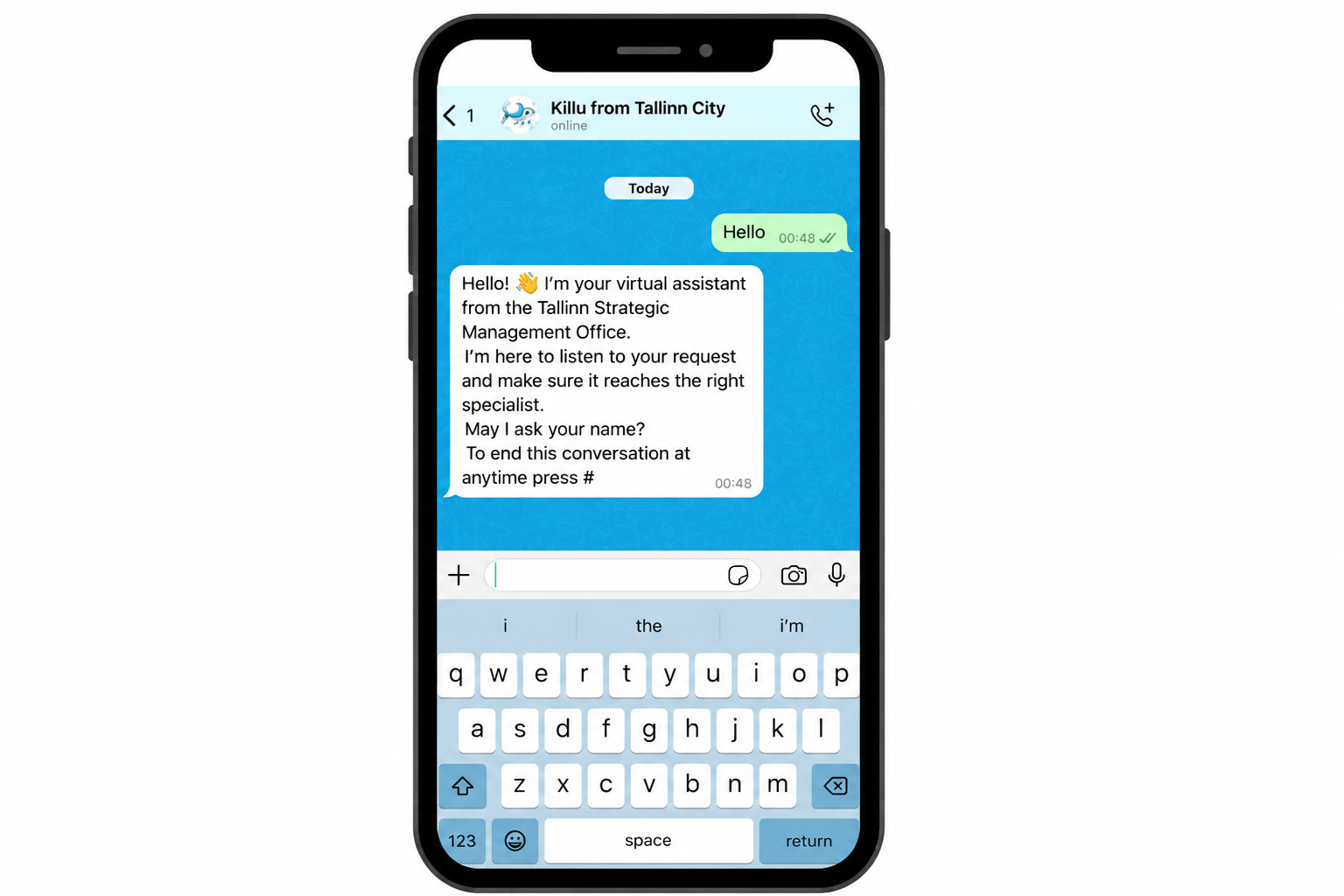
Solution -The reporting service was added to WhatsApp, allowing residents to contact the city through a platform they already use. After saving the chatbot contact, users could access it directly without returning to the Tallinn City website.
→ Guided issue reporting
Problem -Citizens are often unsure how to report a problem or what information the city requires.
Solution – The chatbot guides users through the reporting process, asking for contact details, a description of the problem, location and optional photos before submitting the report.
→ Automatic request management
Problem – Reported issues may need to be manually assigned to the right employee.
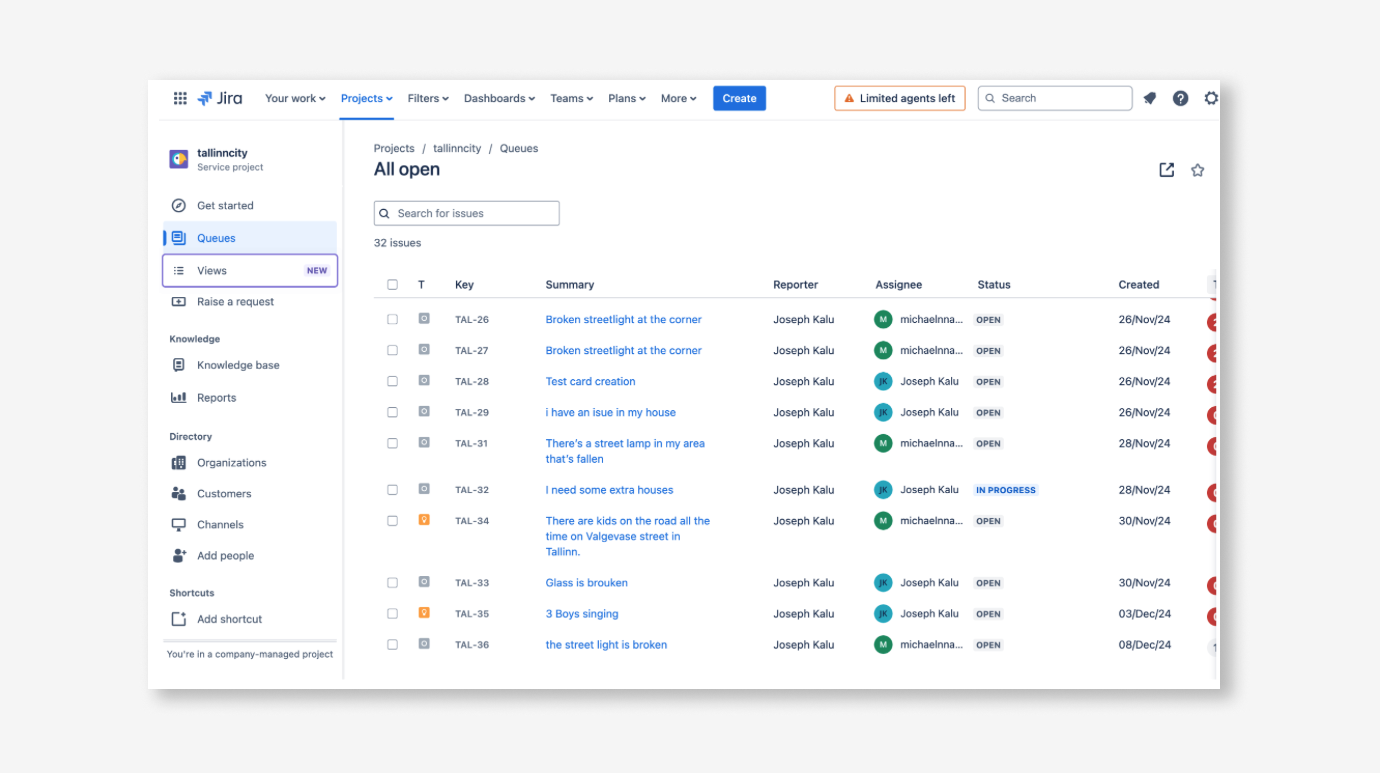
Solution – Submitted requests were automatically sent to Jira, where they were assigned to the right employee and managed in one shared workflow.
→ Clear access to customer support
Problem – Citizens need a simple and visible way to start reporting a problem.
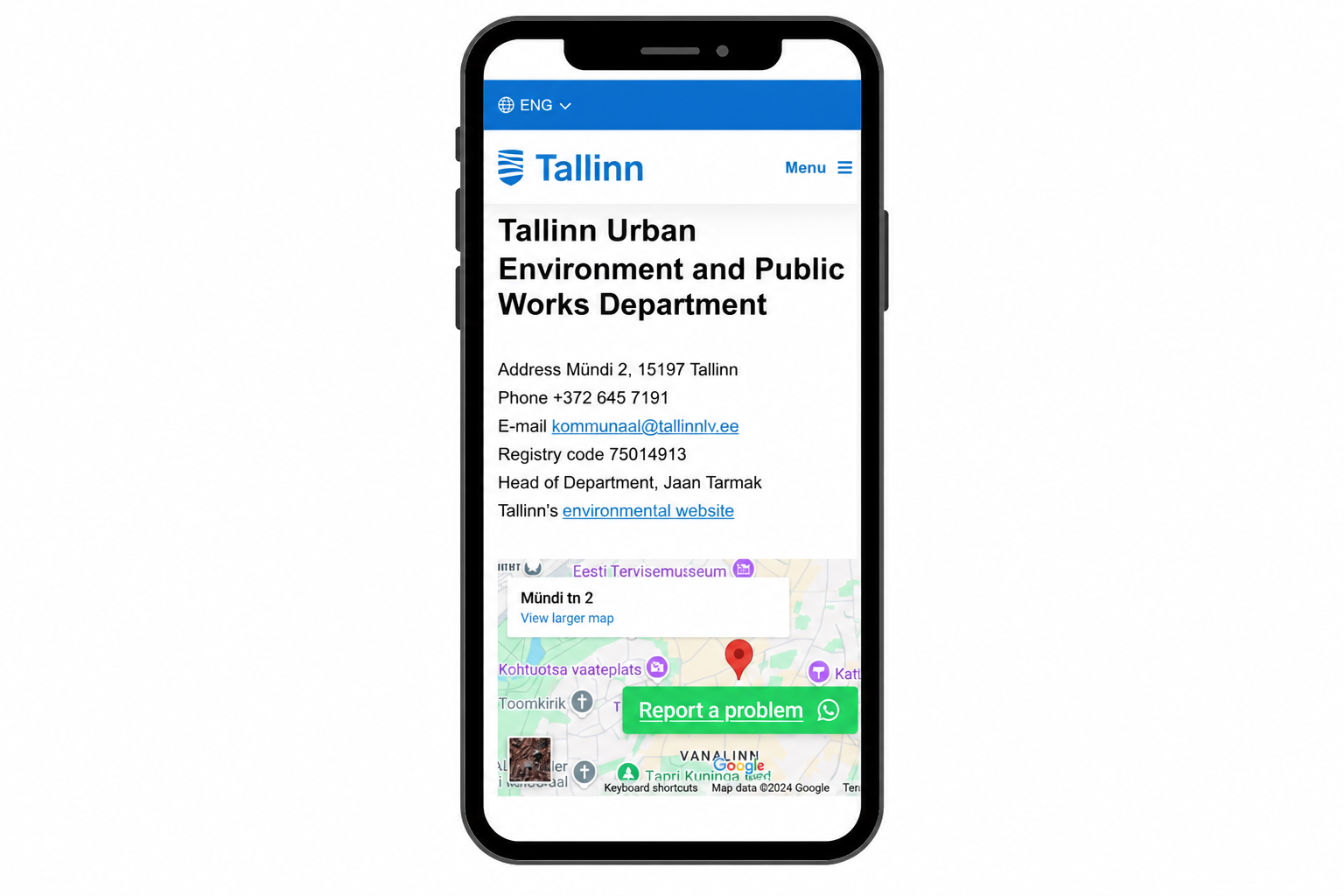
Solution – A WhatsApp button was added to the Tallinn City website, giving users direct access to the chatbot from any page.
→ A recognisable chatbot character
Problem – Automated customer support can feel impersonal and difficult to relate to.
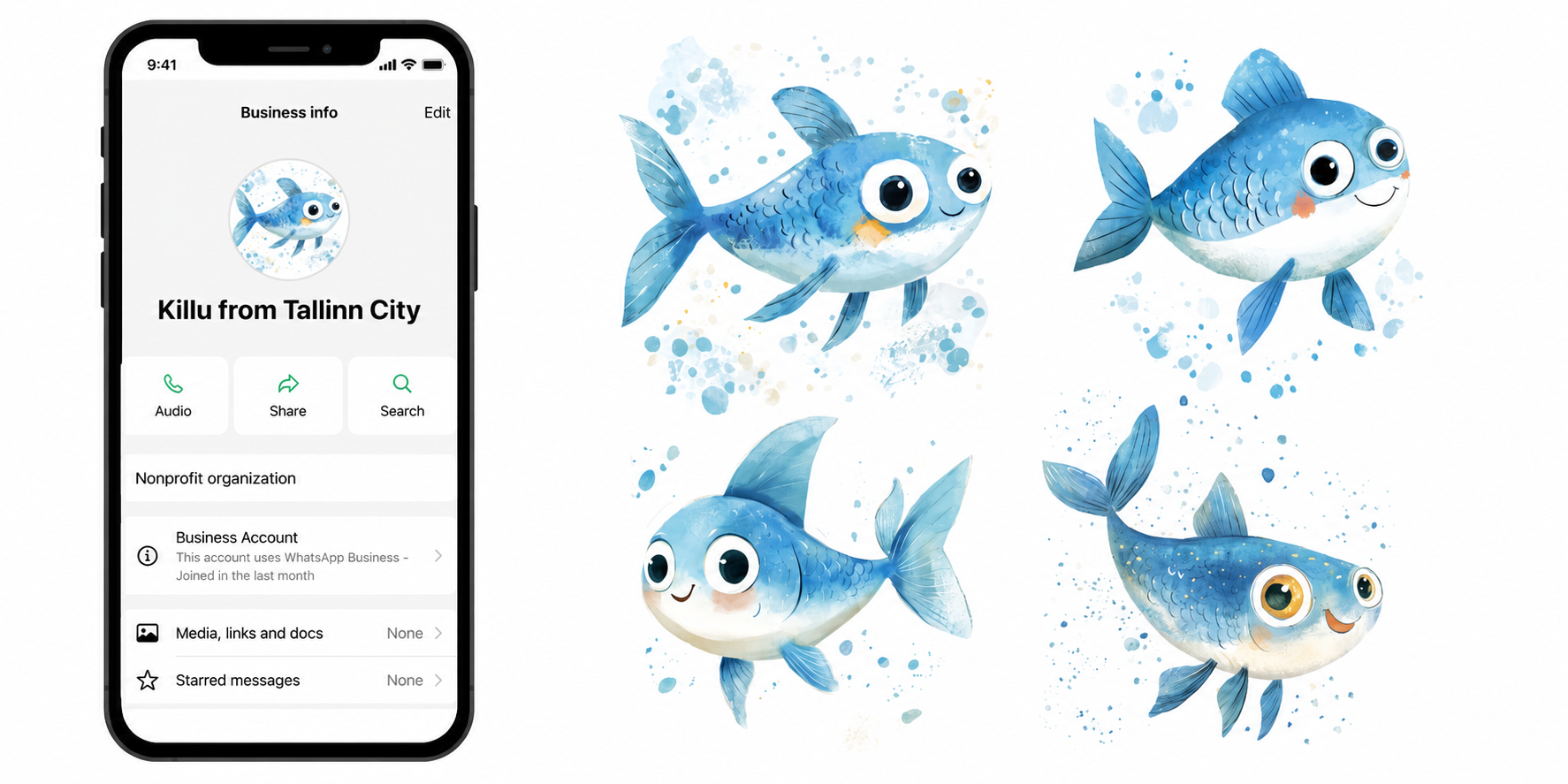
Solution – A chatbot character called Killu was created based on Tallinn City’s visual identity, making the service more recognisable, supportive and friendly.
Usability Testing
The chatbot was tested with users to see if they could easily report a city problem and complete the process. Participants used the Think-Aloud method and shared their feedback after the task. They found the chatbot easy to use, liked the clear conversation flow and appreciated being able to report problems through a familiar platform.
The testing also showed areas for improvement, such as making the first messages clearer and adding automatic location sharing. The feedback was used to improve the final design.
Outcome
User research, information architecture and testing helped create Killu, a WhatsApp chatbot that makes it easier for Tallinn citizens to report city problems. The chatbot connects directly with the city’s customer support workflow and provides a simple and accessible way to communicate with municipal services.
The final outcome was a functional chatbot prototype, supported by user research and information architecture recommendations for the future development of Tallinn City’s customer support services.